










Growing mung bean sprouts at home: guide & tips

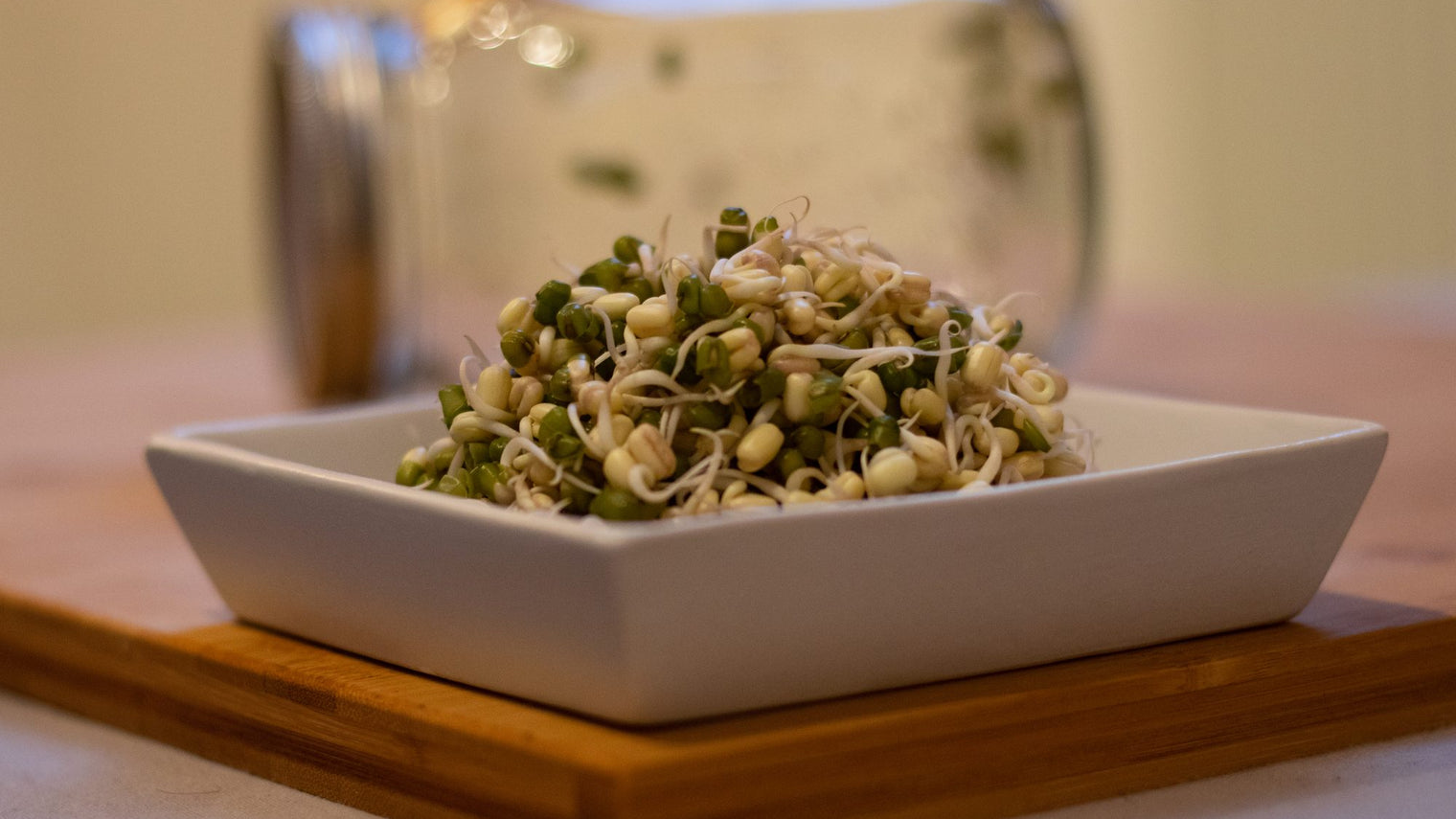
You can grow mung bean sprouts yourself in four steps: soak the beans for eight to twelve hours, rinse them twice a day in the sprouting jar, harvest after three to eight days and blanch them for at least two minutes before eating. Incidentally, these are exactly the sprouts that are usually sold in German supermarkets as ‘soya bean sprouts’. They need the long soaking time because of their hard skin; after that, they're one of the most rewarding varieties for beginners.
At a glance
- Soak mung beans for eight to twelve hours before sprouting
- Rinse twice a day, harvest after three to eight days
- Blanch for at least two minutes before eating
Mung bean sprouts in a sprouting jar: the step-by-step guide
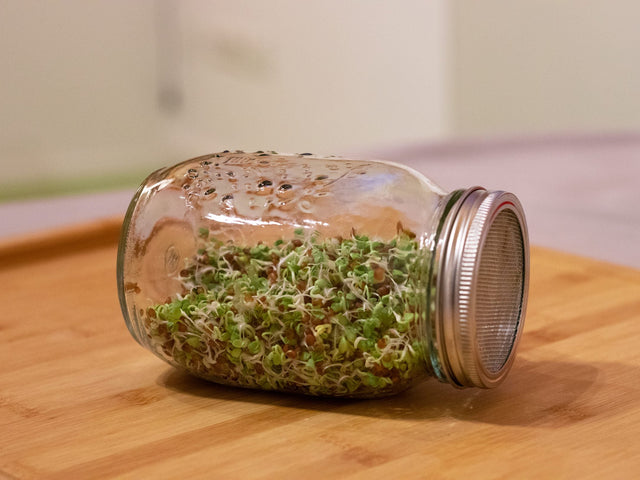
Mung bean sprouts grow reliably in a sprouting jar if you stick to the sequence of soaking, rinsing and draining. Four steps take you from dry seed to sprouts that are ready to harvest. Mung beans germinate best at room temperature between 18 and 22 degrees.
-
Soaking (8–12 hours)
Rinse the mung beans thoroughly before sprouting and soak them overnight in plenty of water. Larger, hard seeds like mung beans need this pre-soaking time, otherwise germination won't even get started. -
Draining and filling the jar
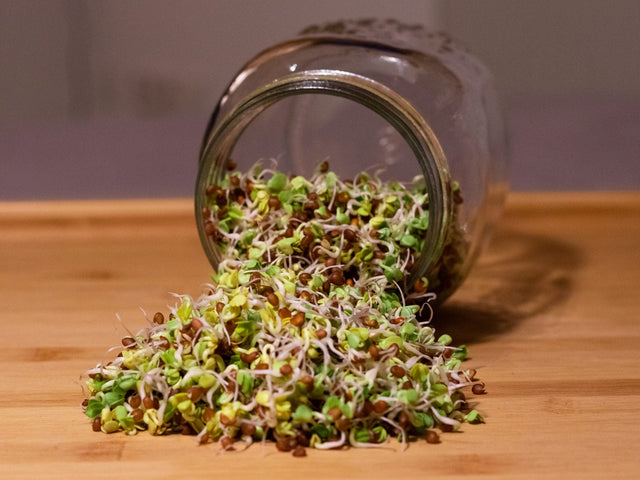
After soaking, pour off the water and put the beans in the sprouting jar. Mung beans are one of the varieties whose seed leaves only unfold late, so at first there's not much to see. -
Rinsing and draining (2x a day)
Rinse with clean water at least twice a day and then drain well. Standing water in the jar encourages unwanted microbes; placing the jar at an angle helps it drain. -
Harvesting (days 3–8, sprouts 2–5 cm)
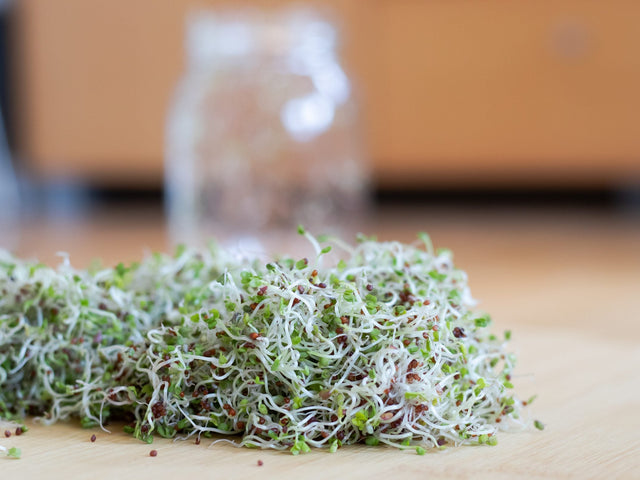
Harvest as soon as the sprouts are about two to five centimetres long. Depending on the plant species and conditions, this takes around three to eight days.
What you need to get started
- A sprouting jar with a rinsing sieve
- Organic mung bean sprouting seeds from a specialist retailer
- Fresh tap water for rinsing
- A spot out of direct sunlight
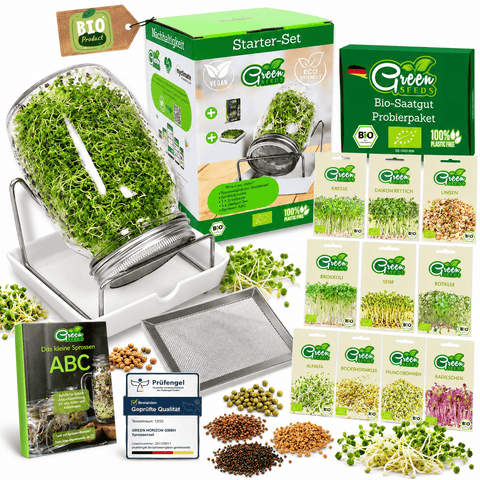
To get started, it's worth taking a look at sprouting jars with a matching sieve, plus organic sprouting seeds in sprouting quality. The step-by-step guide for the sprouting jar also gives a detailed overview of the process.
Tip
After rinsing, place the jar at a slight angle in a bowl so that excess water can drain off. If water is left standing in the jar, the sprouts quickly go limp instead of crunchy.
Organic mung bean sprouting seeds
Sprouting jar with ceramic tray
Why are mung beans particularly good for beginners?
Mung beans are more forgiving of small mistakes than some more delicate sprouting seeds. Their robust skin and comparatively short sprouting time of three to eight days make them a reliable first choice for the sprouting jar.
The fact that the seed leaves unfold late means in practice: you see a clear, compact sprout for longer before the plant develops further. For beginners, that means fewer variables that can go wrong, and a result that's easy to judge, both visually and in terms of effort.
Do you need to blanch mung bean sprouts?
Yes. Mung bean sprouts are the seedlings of a pulse, and it's better not to eat them raw. The German Federal Centre for Nutrition is clear on this: seedlings of pulses ‘should be blanched for at least two minutes or briefly cooked along with the dish before eating’. It takes very little effort – a pan of boiling water is all you need.
In their raw form, pulses such as peas, beans and lentils contain substances such as lectins, which are only rendered harmless by heat. That's why blanching mung bean sprouts isn't optional – it's a must.
Our guide Eating sprouts raw explains which sprouts you can eat raw and what matters when it comes to hygiene.
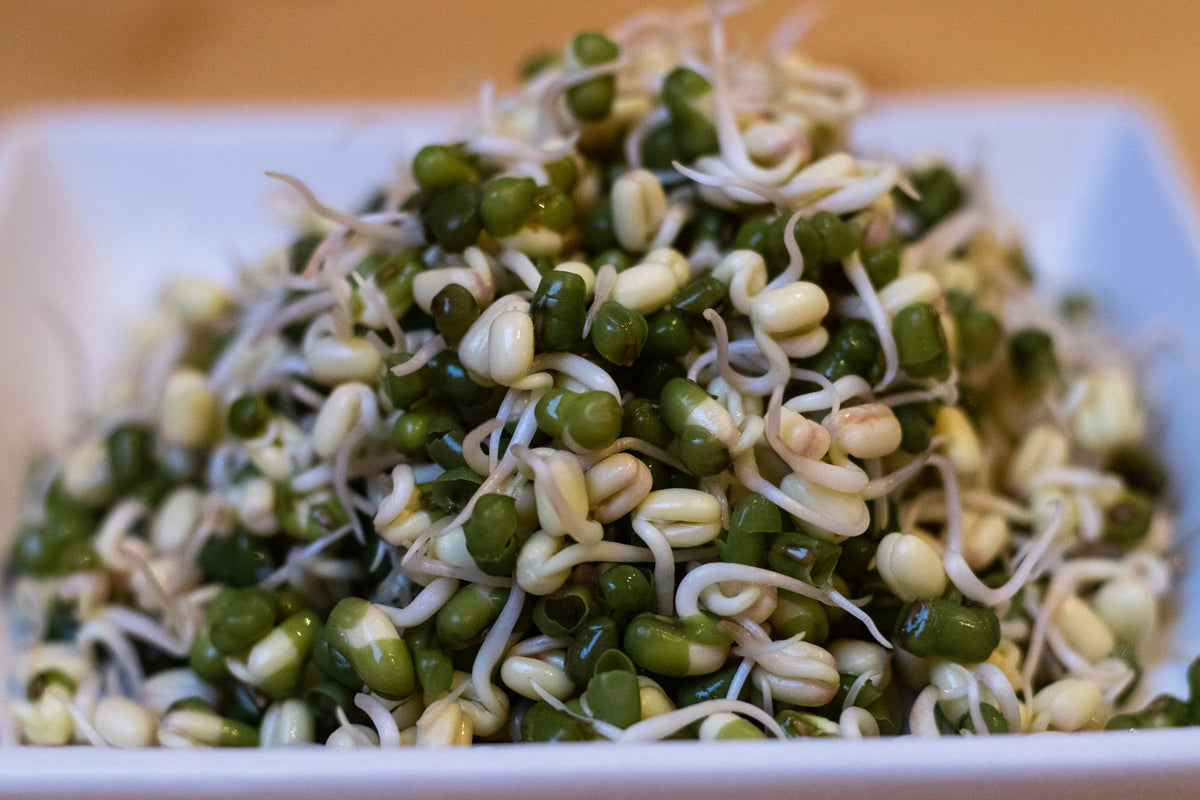
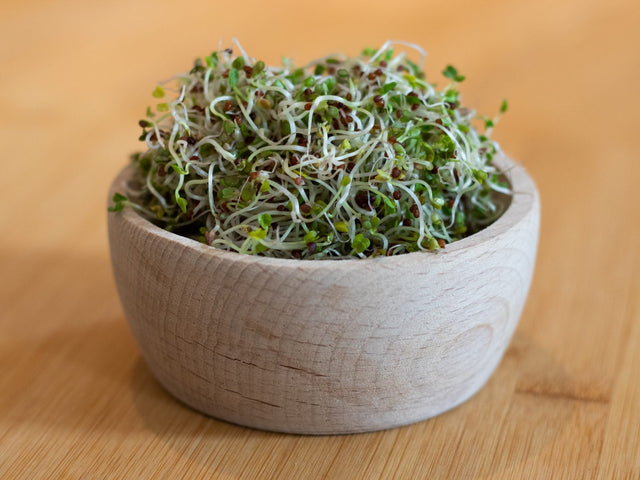
Crunchy and fresh: mung bean sprouts just before blanching
How do you use mung bean sprouts in the kitchen?
Mung bean sprouts work in warm stir-fries just as well as in cold bowls, as long as they've been briefly blanched first. Their neutral, slightly nutty flavour and crunchy bite make them very versatile.
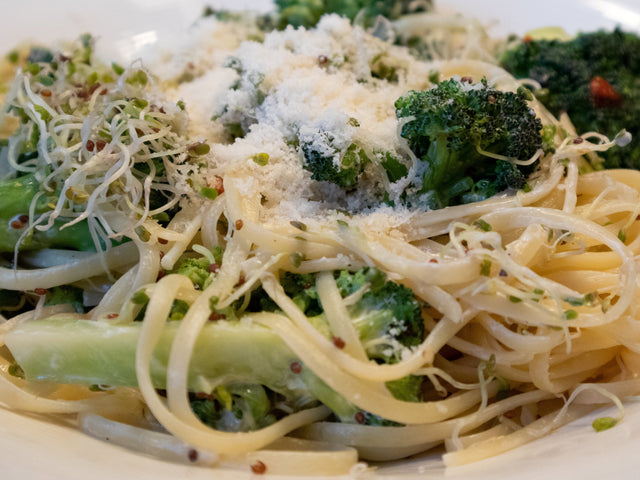
In Asian-inspired cooking, they classically go into the wok, briefly fried with other vegetables, or on top of noodle soups. For salads and bowls, just let them cool after blanching and combine them with dressing, vegetables and a source of protein. They also work well in sandwiches or as a side to fried rice, where they add texture without overpowering the flavour of the other ingredients. If you're looking for specific recipe ideas, you'll find more inspiration around sprouts in our recipe section.
Good to know
Drain finished sprouts well after the last rinse and put them in the fridge. According to the South Tyrol consumer centre (Verbraucherzentrale Südtirol), they keep there for one to two days, so it's better to grow smaller batches.
Recipe video: Asian stir-fry with mung bean sprouts
Go to the recipe: Asian stir-fry with noodles and mung bean sprouts
Sprouts or microgreens: which method suits you?
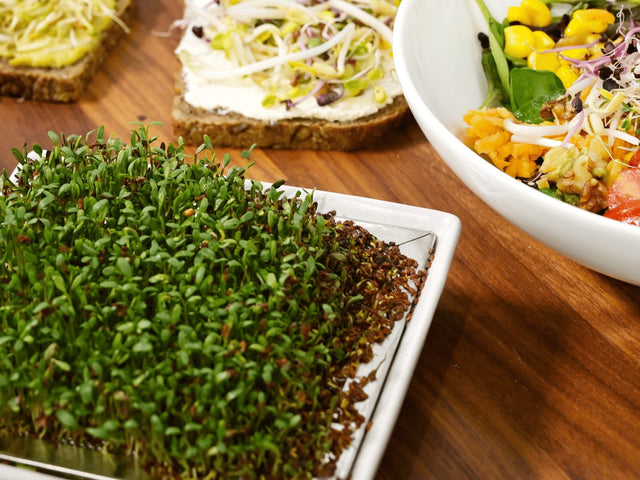
Sprouts such as mung beans grow without soil, partly in the dark, and are ready to harvest after just a few days depending on the variety – mung beans after three to eight. Microgreens, on the other hand, continue to grow in daylight, classically on soil or, as with cress, on a cress sieve with just water, and are only cut once the first green leaves have appeared.
For mung beans, the classic sprouting method in a jar is the right choice, as it needs no soil and is quick. Microgreens are suitable for seeds where you want to harvest the green leaves themselves rather than just use the sprout. Both methods complement each other well in the kitchen, depending on whether you're after crunchy sprouts or tender little leaves. The guide Microgreens on the windowsill shows how it works.
| Feature | Sprouts (e.g. mung bean) | Microgreens |
|---|---|---|
| Growing medium | No growing medium needed | Soil or cress sieve with water |
| Light | Can partly grow in the dark | Daylight needed |
| Harvest time | After a few days (mung beans: 3 to 8) | As soon as the first green leaves appear |
| Equipment | Sprouting jar | Seed tray or cress sieve |
If you'd like to try both, you'll find suitable accessories among our sprouting jars as well as the cress sieve, in which cress and the like grow without any soil at all.
How do you ensure food safety from seed to plate?
‘Good hygiene is always the top priority when growing’, writes the German Federal Centre for Nutrition. That starts with the seeds, not just in the pan. Use seeds that are expressly sold as sprouting seeds so that growing starts hygienically.
In the jar itself, regular rinsing – at least twice a day – ensures a clean sprouting environment and prevents unwanted growth. Together with blanching before eating, this makes the difference between a safe meal and a risky one. The growing guide from Ökolandbau.de offers further advice on growing.
Conclusion
Mung bean sprouts are among the most straightforward projects for the sprouting jar: soak, rinse regularly, harvest after a few days. The only step you shouldn't skip is blanching before eating. If you keep this in mind, you'll have a crunchy, versatile kitchen helper to hand with very little effort.
Frequently asked questions about mung bean sprouts
How long do mung beans need to soak before sprouting?
Mung beans need eight to twelve hours in water before they go into the sprouting jar. Soaking overnight is usually just right.
Do I need to blanch mung bean sprouts before eating?
Yes. Seedlings of pulses such as mung beans should be blanched for at least two minutes or briefly cooked along with the dish before eating, so that substances such as lectins are rendered harmless.
How often do I need to rinse the sprouts in the jar?
At least twice a day. Regular rinsing keeps the sprouts moist and ensures a hygienic sprouting environment.
When are mung bean sprouts ready to harvest?
Depending on conditions, they're ready after about three to eight days. Harvest when the sprouts are two to five centimetres long.
Are soya bean sprouts and mung bean sprouts the same thing?
Mostly, yes. What's sold in shops as ‘soya bean sprouts’ is usually the sprouts of the mung bean (Vigna radiata), not the soya bean.
How long do mung bean sprouts keep in the fridge?
One to two days. Drain the sprouts well after the last rinse, keep them chilled and use them up quickly.
At what temperature do mung beans germinate best?
At normal room temperature between 18 and 22 degrees, in a spot out of direct sunlight.
What's the difference between sprouts and microgreens?
Sprouts grow without soil, partly in the dark, and are harvested after a few days – mung beans after three to eight. Microgreens keep growing in daylight, on soil or in a cress sieve with just water, and are cut as soon as the first green leaves appear.
Sources


