Organic seeds for sprouts – sprouting seeds in organic quality
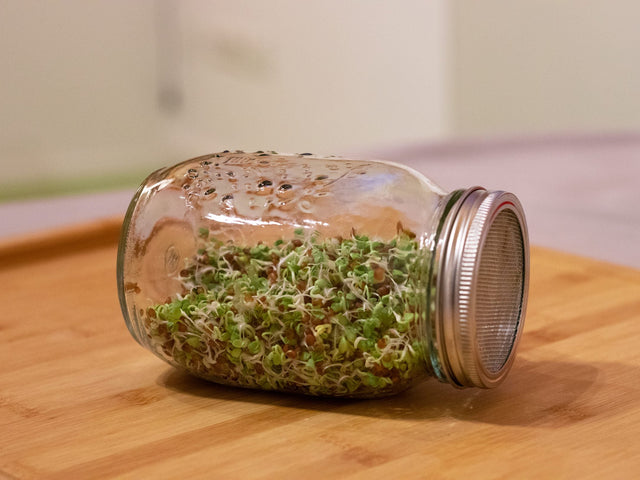
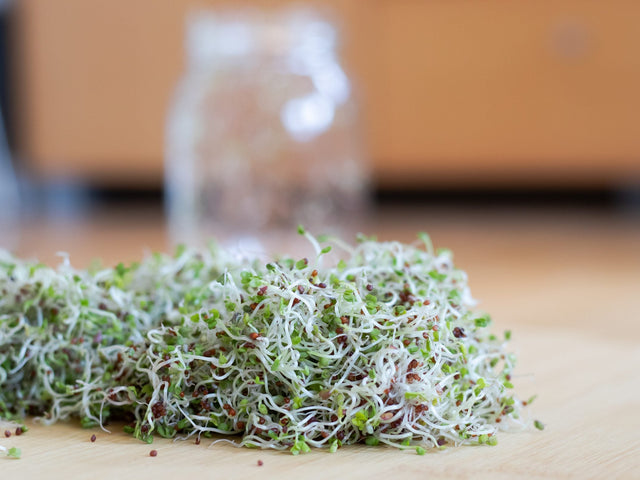
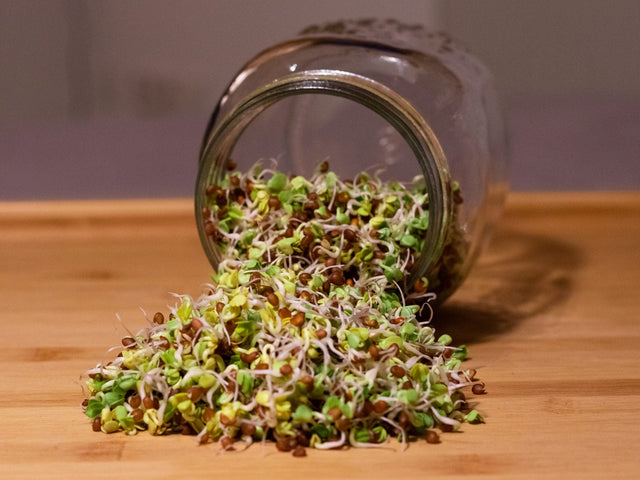
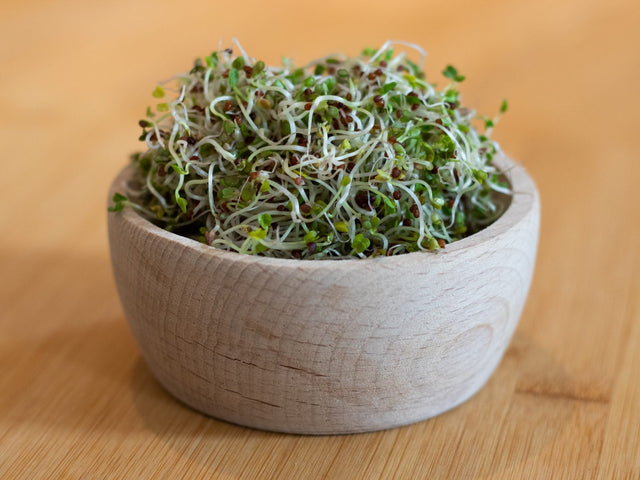
Our organic seeds are made specifically as sprouting seeds: seeds that you grow into fresh sprouts in just a few days in a sprouting jar or on a cress sieve – without soil and all year round. All varieties are certified organic (organic control body DE-ÖKO-006), not treated with synthetic chemicals and packed plastic-free in paper bags. From mild alfalfa and nutty mung beans to hot cress and radish, you'll find the right sprouting seeds for every taste here.
What are sprouting seeds – and why organic?
Sprouting seeds are seeds intended to be eaten as sprouts. Unlike garden seeds, they are not treated, because you eat the sprout together with the seed. That's why organic quality is especially worthwhile here: our sprouting seeds come from certified organic farming and are certified by the organic control body DE-ÖKO-006.
Our varieties at a glance
-
Mild: alfalfa, red clover – ideal for beginners, sandwiches and salads
-
Nutty: mung beans, lentils – crunchy, perfect for bowls and Asian dishes
-
Spicy: broccoli, fenugreek, red cabbage – strong flavour
-
Hot: radish, daikon radish, mustard, cress – for a piquant note
-
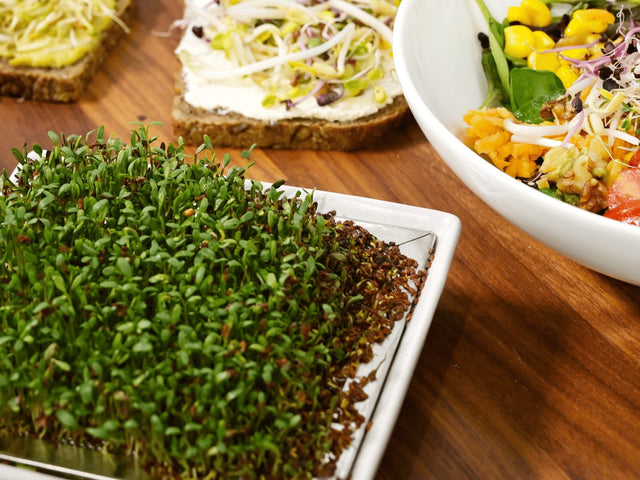
For the cress sieve: cress, rocket and chia – mucilaginous seeds that do better spread flat
There are also three ready-made mixes: the Fitness Mix (wheat, mung beans, daikon radish), the Wellness Mix (mung beans, alfalfa, lentils, daikon radish) and the Gourmet Mix (lentils, quinoa, daikon radish).
Organic sprouting seeds individually, in a set or to try
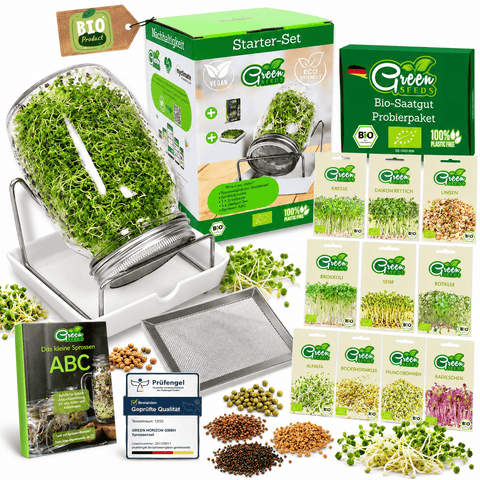
To try out: The organic seed sampler pack contains 10 varieties of 5 g each – enough for one portion of sprouts per variety. That way you can find out which variety you like best.
Individually: With the individual organic sprouting seeds you choose exactly the ones you like from 12 varieties.
In a set: Several varieties at a lower price are available as sets of 3 – Fitness, Wellness and Gourmet – as sets of 5 (with alfalfa & cress or with broccoli & fenugreek) and in the large set of 8 and set of 10 with the complete range.
For the cress sieve: The set of 3: cress, rocket & chia is made to match the cress sieve.
Organic broccoli seeds in large packs
Broccoli sprouts are among the most popular sprouts of all. Our organic broccoli seeds come from Italy and are available in 200 g, 500 g and 1 kg – ideal if you harvest regularly. With a growing guarantee: we promise a high germination rate, otherwise you get your money back.
How to grow sprouts from organic seeds
-
Soaking: Put a small amount of seeds into the sprouting jar, fill with water and leave to soak for 8–12 hours.
-
Rinsing: Pour the water out through the mesh lid and rinse the seeds thoroughly.
-
Draining: Place the jar in the stand at an angle so that remaining water can drain off.
-
Care: Rinse twice a day – in a bright spot, but out of direct sunlight.
-
Harvesting: Harvest after about 3–7 days, rinse one last time and store in the fridge.
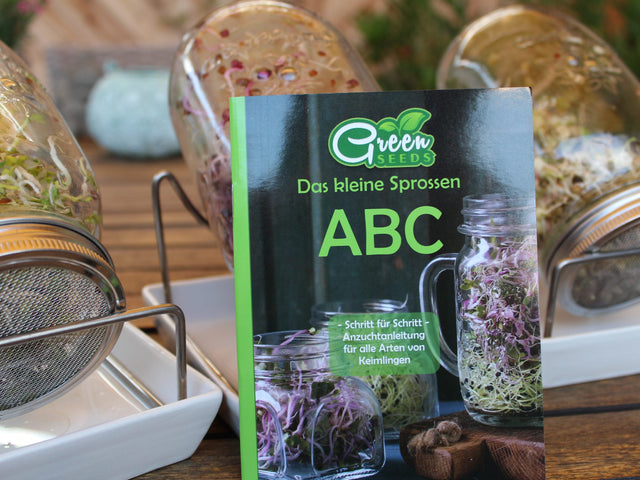
You'll find detailed information on each variety in the Sprouting ABC.
Why organic seeds from GreenSeeds?
-
Certified organic: organic control body DE-ÖKO-006
-
Made for sprouts: sprouting seeds for eating, not treated with synthetic chemicals
-
Plastic-free: packed in paper bags
-
Fresh all year round: ready to harvest in a few days – even in the middle of winter
-
Wide choice: 12 varieties individually, as a mix or in a set
-
With you quickly: shipping in 2–4 working days, free from €39
Frequently asked questions about organic seeds for sprouts
Can I use ordinary garden seeds for sprouts?
No. Garden seeds are often treated and not intended for eating. For sprouts you should always use designated sprouting seeds – ideally in organic quality.
Which seeds go in the sprouting jar and which on the cress sieve?
Alfalfa, broccoli, mung beans, lentils, radish, daikon radish, fenugreek and wheat belong in the sprouting jar. Cress, rocket, chia and mustard form a gel layer with water and do better spread flat on the cress sieve.
Which variety is best for beginners?
Alfalfa, mung beans and radish sprout reliably and quickly. If you can't decide, start with the sampler pack with 10 varieties.
How many seeds do I need per portion?
The bottom of the sprouting jar should only be loosely covered with seeds. The seeds swell and need room to grow.