







Which sprouts should you not eat raw?


Are sprouts from your own jar automatically safer than the ones in plastic packaging from the supermarket? Not necessarily, because the risk lies not in the packaging but in the seed itself and in the conditions under which it germinates. If you know which sprouts can safely go onto your plate raw and which belong in the pan first, you can reduce the risk in a targeted way without having to give up sprouts.
At a glance
- Sprouts can be contaminated with EHEC bacteria or salmonella without you being able to see or smell it
- You should heat pulses such as chickpeas, lentils or mung beans before eating them
- Nightshades such as tomatoes are generally not suitable for sprouting
- Children, pregnant women, older people and people with weakened immune systems should avoid raw sprouts
- According to the German consumer advice centre (Verbraucherzentrale), heating is the safest way to deal with disease-causing bacteria
Why can sprouts be invisibly contaminated even when they look fine?
Sprouts can be contaminated with Escherichia coli bacteria (EHEC) or salmonella without any outward signs. Salmonella can be neither seen nor smelled, even when the sprouts look perfect. It is precisely this deception by appearance and smell that makes hygiene rules so important when sprouting.
Even the seeds from which sprouts are grown can be contaminated with bacteria. Pre-cut salads and sprouted seeds are ideal breeding grounds for bacteria, as the guide to sprouts from the Verbraucherzentrale in Höxter explains. So the problem doesn't start in the jar, it starts when you buy the seeds.
The warm, moist sprouting climate as a risk factor
Sprouts germinate in a warm, moist climate. This is exactly the environment in which unwanted pathogens multiply quickly. What is ideal for the seeds to germinate is just as good a breeding ground for bacteria. The Lower Saxony State Office for Consumer Protection and Food Safety (LAVES) confirms: high humidity and temperatures during sprout production create an ideal environment for the growth of microorganisms.
Good to know
According to LAVES, seeds naturally carry microorganisms and are not sterile. The germination conditions in a warm, moist climate further encourage the growth of these microorganisms.
The seeds are washed after harvest, often combined with a treatment to reduce germs, but they remain a natural product with their own microbial flora. For you at home, this means: hygiene when setting up, rinsing and storing is not an optional extra step but the key lever for reducing the risk.
Which sprouts should you not eat raw?
Not all sprout varieties carry the same risks. With some it's about bacteria, with others it's about the plant's own substances, which only become relevant through the sprouting process. The following overview shows what to look out for with different varieties.
| Variety | Edible raw? | Background |
|---|---|---|
| Chickpeas | Not raw | Rising content of protease inhibitors during germination, according to LAVES |
| Peas, lentils, mung beans | Better heated | Pulses contain lectins, which are only rendered harmless by heat |
| Tomatoes (nightshade) | Not suitable for sprouting at all | Toxic solanine, no exceptions |
| Cress (microgreen) | Can be eaten raw | Less prone to microbial contamination; for at-risk groups the rule still applies: heat it |
Pulses: lectins and how to handle them when sprouting
Larger seeds such as peas or mung beans should be washed and soaked overnight before sprouting. If you sprout pulses, you should also heat them before eating to render unwanted substances such as lectins harmless. The guide Growing your own mung bean sprouts shows exactly how to do this with mung beans. LAVES specifically mentions chickpea sprouts here: during germination, their content of protease inhibitors rises, which is why they should not be eaten raw.
Nightshades: solanine without exception
Tomatoes belong to the nightshade family and are never suitable for sprouting because of the toxic solanine. This applies regardless of soaking time, hygiene or heating. The only safe recommendation here is: don't sprout them.
What was the issue with fenugreek?
In spring 2011, there was a serious outbreak of the intestinal bacterium EHEC O104:H4 in Germany. The authorities identified sprouts from a horticultural business in Lower Saxony as the source. Following epidemiological investigations and trace-back by the German Federal Institute for Risk Assessment (BfR), the Federal Office of Consumer Protection and Food Safety (BVL) and the Robert Koch Institute (RKI), fenugreek seeds imported from Egypt were identified as the cause with a high degree of probability.
Important for context: the investigation found no evidence that seed types other than fenugreek seeds were linked to EHEC infections. A possible risk from cross-contamination of other seed products in Germany was not confirmed either. Since then, the federal authorities no longer see any reason to recommend generally not eating sprouts and seedlings raw. The exception is fenugreek seeds imported from Egypt and their sprouts.
Microgreens: a practical alternative
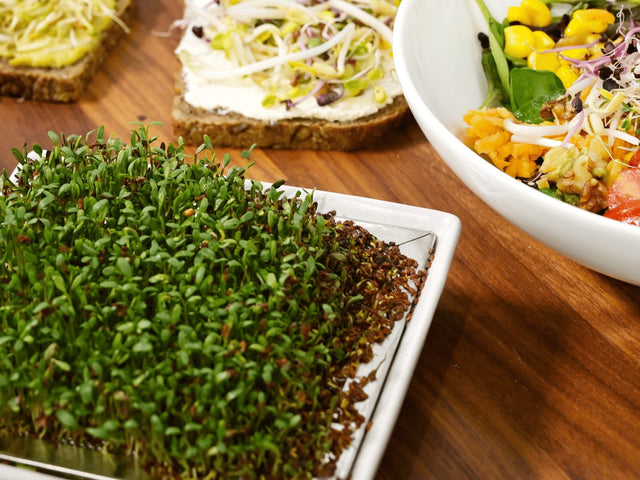
Microgreens such as cress are considered less prone to microbial contamination. With this growing method, the seedlings are left to grow longer until the first green leaves appear, which are then cut off and eaten. If you want to avoid hygiene uncertainties with classic sprouts, microgreens are a good addition to your home growing. The guide Microgreens on the windowsill explains how it works, and if you like things really simple, you can also sprout cress on cotton wool.
Who should avoid raw sprouts?
Young children, pregnant women, older people and people with weakened immune systems should generally avoid eating fresh, raw sprouts and seedlings. These groups should only eat sprouts after they have been sufficiently heated.
Important
According to LAVES, young children, pregnant women, older people and people with weakened immune systems should not eat fresh sprouts and seedlings raw, but only after sufficient heating.
| Eating raw acceptable | Better heated |
|---|---|
| Healthy adults without risk factors | Children, pregnant women, older people |
| Sprouts from a freshly germinated, hygienically prepared batch | People with weakened immune systems |
| Short time between harvest and eating | Pulse sprouts such as chickpeas |
| Fenugreek imported from Egypt |
According to the Verbraucherzentrale, EHEC bacteria and salmonella are particularly dangerous for people at risk.
How do you make sprouts safer by heating them?
Heating food is considered the safest way to deal with disease-causing bacteria, as they are killed by the high temperatures in the pan. In heated form, even people with weakened immune systems can therefore eat sprouts without concern. This shifts the decision away from simply going without towards a practical preparation rule.
-
Wash the sprouts thoroughly
Even before heating, it's worth giving them a thorough wash under running water to remove coarse dirt and loose bacteria. -
Cook through in a pan or wok
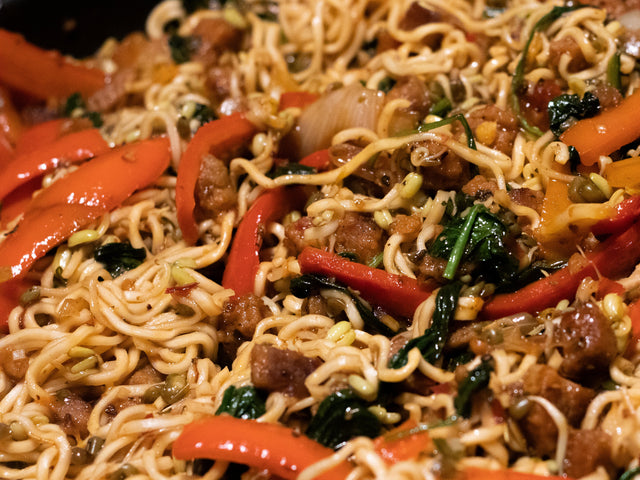
Fry the sprouts until they are hot all the way through. For sprouts of pulses, the German Federal Centre for Nutrition (BZfE) specifies at least two minutes of blanching or cooking along with the dish. -
Cook in soups or stews
Add the sprouts to the simmering soup towards the end of the cooking time and let them cook for at least two minutes. -
Serve piping hot
Heated sprouts should be eaten promptly and not kept warm again for long periods.
Tip
Mung bean sprouts are great for the wok because they keep a little bite even after heating. If you miss the taste of raw sprouts, combine heated sprouts with fresh herbs or a squeeze of lemon just before serving.
What should you look out for when buying and storing sprouts?
Raw sprouts must always be washed thoroughly and used as quickly as possible to reduce the microbial load. This applies to both bought and home-grown sprouts, because the same biological process takes place in your own jar as in industrial production.
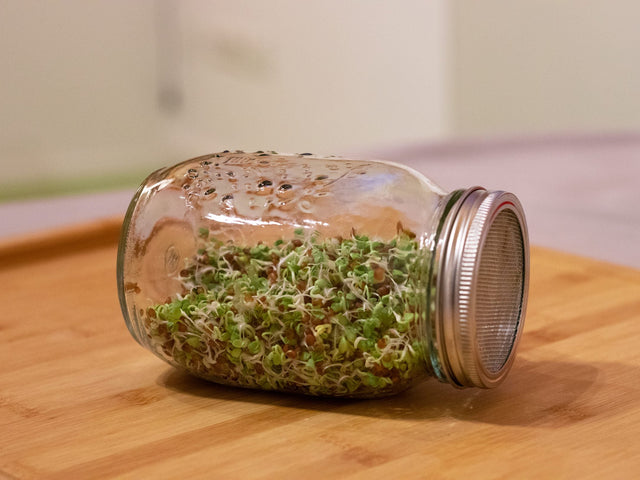
Quality control starts with the seed. Larger seeds such as peas or mung beans should be washed and soaked overnight before they go into the sprouting jar. You'll find step-by-step instructions for the whole sprouting process here: Growing sprouts in a jar: step-by-step guide. Suitable organic sprouting seeds for home use are available in our range of organic sprouting seeds.
Checklist: freshness check before eating
- Sprouts smell neutral, not musty or sour
- No slimy surface, no discolouration
- Packaging of ready-made products not bloated
- Kept chilled throughout
- Time between harvest and eating as short as possible
If food no longer seems fresh or the packaging is bloated, the products should be thrown away. This applies to bought sprouts just as much as to your own batch: if in doubt, throw it out rather than take a risk.
Organic sprouting seeds, single pack
Sprouting jar with ceramic tray
What applies today after the 2011 EHEC outbreak?
The production process for sprouts and seedlings generally favours the growth of pathogens – BfR, BVL and RKI jointly confirm this. A 2009 BfR study also showed that bacteria multiply considerably in pre-packed sprouts and seedlings within just a few days.
The BfR also recommends that producers of sprouts and seedlings intended to be eaten raw treat the seeds before use in such a way that any pathogens present are eliminated.
Good to know
For consumers, the central recommendation from BfR, BVL and RKI remains simple: wash sprouts and seedlings thoroughly before eating and use them as quickly as possible to reduce the microbial load. As a precaution, people with weakened immune systems should avoid eating them raw altogether.
Conclusion
Not every sprout is equally risky, but every sprout deserves care. Pulses such as chickpeas should be heated, tomato seeds don't belong in the sprouting jar at all, and at-risk groups are much safer with heated sprouts. If you wash thoroughly, use them up promptly and, when in doubt, choose the pan over the raw plate, you can enjoy home-grown sprouts with a clear conscience.
Frequently asked questions about sprouts and eating them raw
Which sprouts should you not eat raw?
You should heat sprouts of pulses such as chickpeas, peas, lentils or mung beans before eating them. With chickpeas, according to the Lower Saxony State Office for Consumer Protection (LAVES), the content of protease inhibitors rises during germination. Seeds of nightshades such as tomatoes are generally not suitable for sprouting because of the solanine they contain.
Why are sprouts more susceptible to bacteria than other vegetables?
Sprouts germinate in a warm, moist climate that encourages pathogens to multiply quickly. The seeds themselves can be contaminated with bacteria before the sprouting process even begins.
Who should generally avoid raw sprouts?
According to the Lower Saxony State Office for Consumer Protection (LAVES), children, pregnant women, older people and people with weakened immune systems are considered at-risk groups and should generally not eat fresh sprouts raw, but only after sufficient heating.
Does heating really make sprouts safe?
Yes. Heating is considered the safest way to deal with disease-causing bacteria, as they are killed by the high temperatures in the pan. In heated form, even people with weakened immune systems can therefore eat sprouts without concern.
Are microgreens a safe alternative to classic sprouts?
Microgreens such as cress are considered less prone to microbial contamination. The seedlings are left to grow longer until the first green leaves appear, which are then cut off and eaten.
Sources


