








Growing sprouts in a jar: step-by-step guide

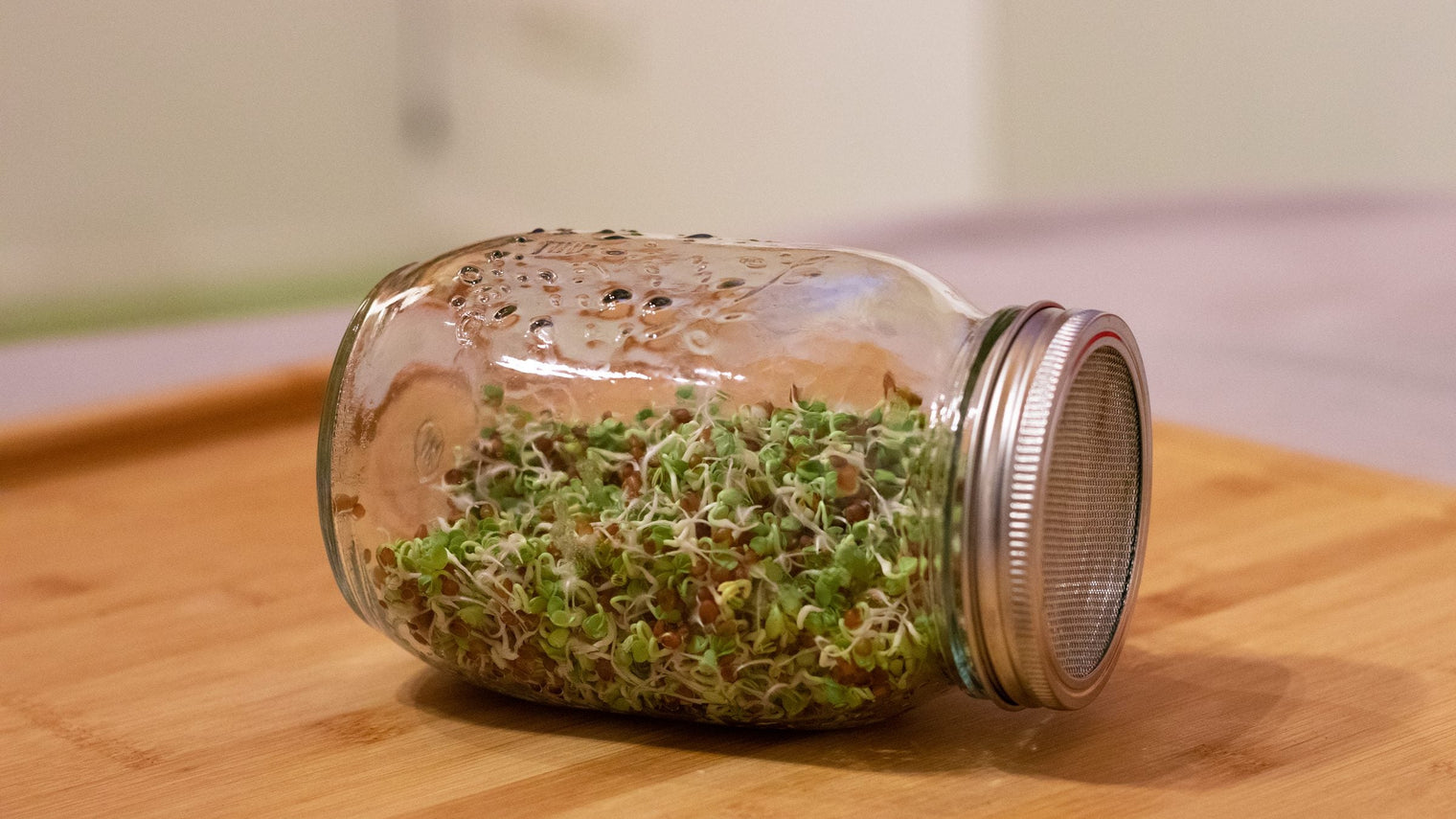
Soaking, draining, rinsing, harvesting: that's all there is to growing sprouts in your own jar. To get it right, a few details matter, above all the right soaking time and making sure no water is left standing in the jar after rinsing. Here you'll find step-by-step instructions and an overview of how long each type of seed should soak.
At a glance
- One to two tablespoons of seeds are enough for one jar, and the bottom should only be loosely covered
- Soak depending on the variety: small seeds 4 to 6 hours, lentils and mung beans 8 to 12 hours
- Then rinse at least twice a day and leave the jar to drain at an angle
- Harvest after about 3 to 7 days, store in the fridge and eat within a few days
What do you need to grow sprouts in a jar?
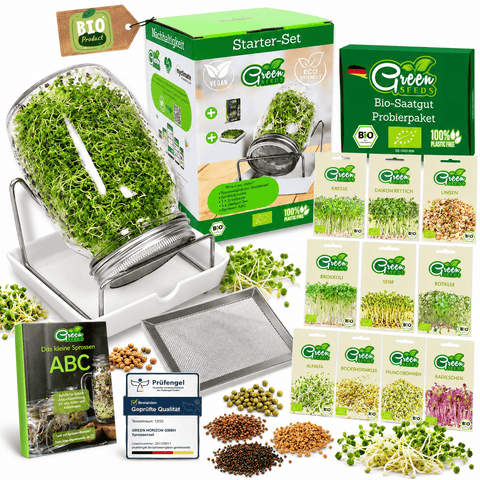
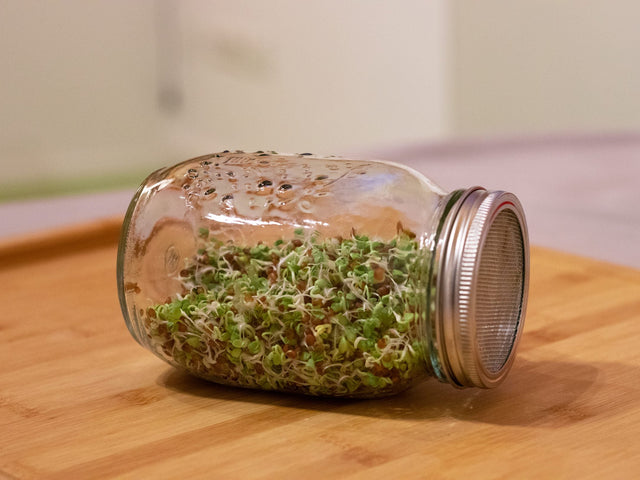
You don't need much equipment. What matters is a jar with a mesh lid that you can pour the water out through, and seeds that are specifically intended for sprouting. Ordinary garden seeds are meant for sowing in soil and are often not suitable for eating.
What you need
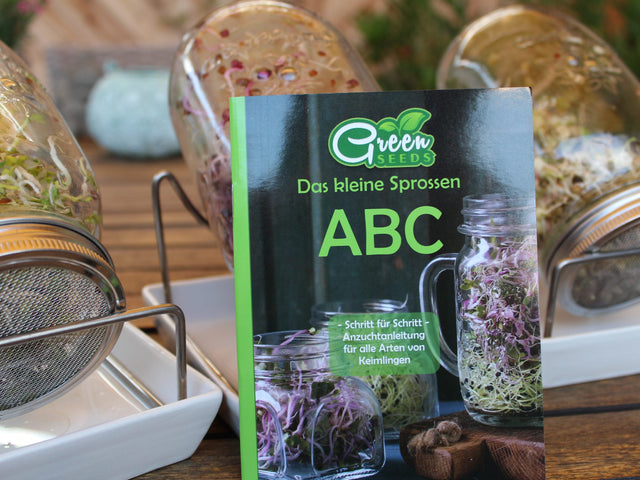
- A sprouting jar with a mesh lid, ideally with a stand for draining
- Sprouting seeds, for example in organic quality
- Fresh water for soaking and rinsing
- A bright spot out of direct sunlight
If you don't have a sprouting jar, you can make one from a screw-top jar. The guide DIY sprouting jar shows you how.
Sprouting jar with ceramic tray and cress sieve
Organic sprouting seeds, single pack
How long do you need to soak sprouts?
Soaking kick-starts germination. How long the seeds stay in the water depends mainly on their size and hardness. Longer is not better: if the seeds stay in the water for too long, there can be problems with bacteria, according to the German broadcaster NDR.
| Seeds | Soaking time |
|---|---|
| Alfalfa, radish | 4 to 6 hours |
| Lentils, mung beans | 8 to 12 hours |
| Chickpeas | up to 12 hours |
| Cress, mustard | no soaking at all |
Good to know
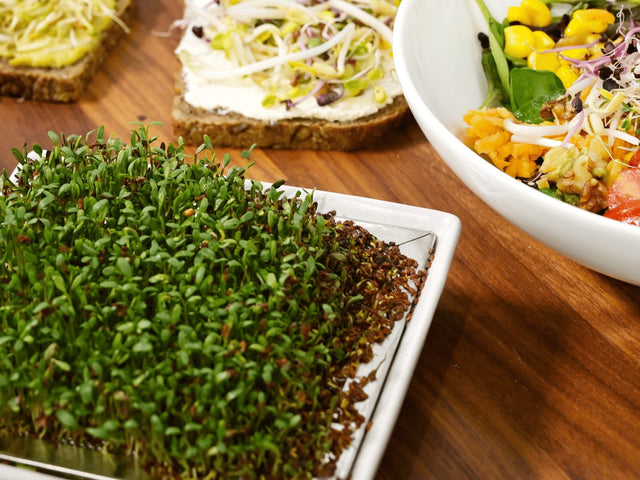
Cress, chia, rocket and mustard turn slimy in water. These mucilaginous seeds are best grown without soaking in the cress sieve rather than in a jar.
Growing sprouts in a jar: step by step
From dry seeds to harvest takes about three to seven days, depending on the variety. For most of that time, you don't have to do anything except rinse.
-
Measure the seeds
Put one to two tablespoons of seeds in the jar. The bottom of the jar should only be loosely covered, as the sprouts need room. -
Soak
Fill the jar with water and leave the seeds to soak according to the variety; the times are in the table above. -
Pour off and drain
Pour the water out through the mesh lid, rinse the seeds thoroughly and place the jar at an angle in the stand with the lid facing down so that any remaining water can drain away. -
Rinse twice a day
Rinse with fresh water, ideally morning and evening, and let the jar drain well each time. -
Find the right spot
Bright, but out of direct sunlight, at 18 to 22 °C. Seeds that germinate in the dark, such as broccoli, are kept in the dark or in the fridge for the first few days. -
Harvest
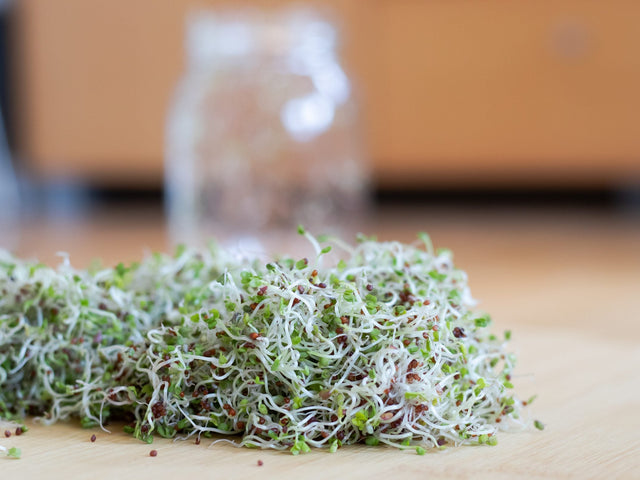
Harvest after about 3 to 7 days, when the sprouts are 2 to 5 centimetres long, depending on the variety. Rinse one last time, drain well and store in the fridge.
Tip
There are separate guides for individual varieties: Growing broccoli sprouts at home explains the dark phase, and Growing mung bean sprouts at home shows how to make them nice and crunchy.
How can you tell that something is going wrong?
Most problems are caused by water that is left standing in the jar after rinsing. If you let the jar drain well after each rinse, the sprouts absorb enough moisture without larger amounts of bacteria building up. Cleanliness is the most important thing: clean the jar and lid thoroughly before you start a new batch.
Important
If the sprouts smell musty or look strange, don't eat them; throw the batch away instead.
Which sprouts should you heat before eating?
You can eat most sprouts raw. However, according to the German Federal Centre for Nutrition (BZfE), you should blanch pea, bean and lentil seedlings for at least two minutes or briefly cook them along with the dish. According to LAVES, the food safety authority of Lower Saxony, chickpea seedlings should not be eaten raw. Nightshades such as tomatoes, potatoes, peppers, chillies and aubergines are unsuitable for sprouting because their seedlings contain solanine.
According to LAVES, children, pregnant women, older people and people with weakened immune systems should avoid fresh sprouts or only eat them sufficiently heated. Find out more in the guide Which sprouts should you not eat raw?
Conclusion
Growing sprouts in a jar takes very little effort: measure out suitable seeds, soak them according to the variety, rinse twice a day and let them drain well. After about three to seven days, you can harvest. If you pay attention to the soaking time, keep the jar clean and always throw away musty batches, you'll have fresh sprouts in your kitchen every week.
Frequently asked questions about growing sprouts in a jar
How long do you need to soak sprouts?
Small seeds such as alfalfa and radish 4 to 6 hours, lentils and mung beans 8 to 12 hours, chickpeas up to 12 hours. Cress and mustard are not soaked at all.
How often do I need to rinse sprouts?
At least twice a day, ideally morning and evening. After each rinse, place the jar at an angle so that any remaining water can drain away.
Do sprouts need light?
Sprouts need a bright spot out of direct sunlight. The exception is seeds that germinate in the dark, such as broccoli, which are kept in the dark or in the fridge for the first few days.
How long do home-grown sprouts keep?
After harvesting, rinse them thoroughly, drain well and store them in the fridge. It's best to eat them within a few days.
Can I use ordinary garden seeds for sprouting?
Better not. Garden seeds are meant for sowing in soil and are often not suitable for eating. Use sprouting seeds that are specifically sold for sprouts.
Sources
- Ökolandbau.de: Growing seedlings and sprouts (in German)
- NDR guide: Growing sprouts and microgreens (in German)
- German Federal Centre for Nutrition: Sprouts and microgreens (in German)
- LAVES Lower Saxony: Sprouts and seedlings (in German)
- GreenSeeds: Sprouting jar instructions (organic broccoli seeds product page)
- GreenSeeds: Cress sieve and mucilaginous seeds


